How to Choose Non Slip Grip Socks for Pilates: A Court-Tested 4-Step Method
Choose non slip grip socks for Pilates with a four-step court test for grip, movement, comfort, and fit. Find the right pair for your game.
On this page
Non-slip grip socks for Pilates should keep your foot settled inside a well-fitting shoe, feel breathable, and provide continuous traction across the sole. The wrong default is judging them only by studio-floor stickiness. Use a four-step test that checks sole coverage, in-shoe movement, comfort, and court-shoe fit.
1. Know what good studio grip socks should do
The right pair creates a stable interface between your foot and the inside of your shoe. It should reduce unwanted movement, stay comfortable through a full class or practice, and keep grip across the heel, forefoot, and other contact areas.
Sock-to-shoe grip and shoe-to-court traction serve different purposes. Grippy socks can help reduce sliding inside footwear, but they do not replace court shoes or create traction on a pickleball or tennis court. A 2022 study found that grip socks increased measured friction from 0.60 to 1.17 and reduced forefoot displacement during a slalom course. The study involved sports players rather than Pilates participants, so use it as relevant evidence for in-shoe movement, not as a Pilates-specific result. Read the 2022 study on in-shoe displacement.
Use this manual sequence before buying:
- Inspect the sole for continuous coverage.
- Test movement inside the actual shoe.
- Assess compression, breathability, and pressure points.
- Confirm the fit during court movements.
This method is more useful than choosing a pair based on appearance or a few rubber dots. For a broader buying framework, compare these criteria with what to look for in court socks.
2. Step one: Inspect the grip pattern and sole coverage
Turn the sock over and inspect the entire sole. Look for “full-sole” traction, then check whether the grip reaches the heel, forefoot, and midfoot. Press the sole with a thumb to find uncovered zones before buying.
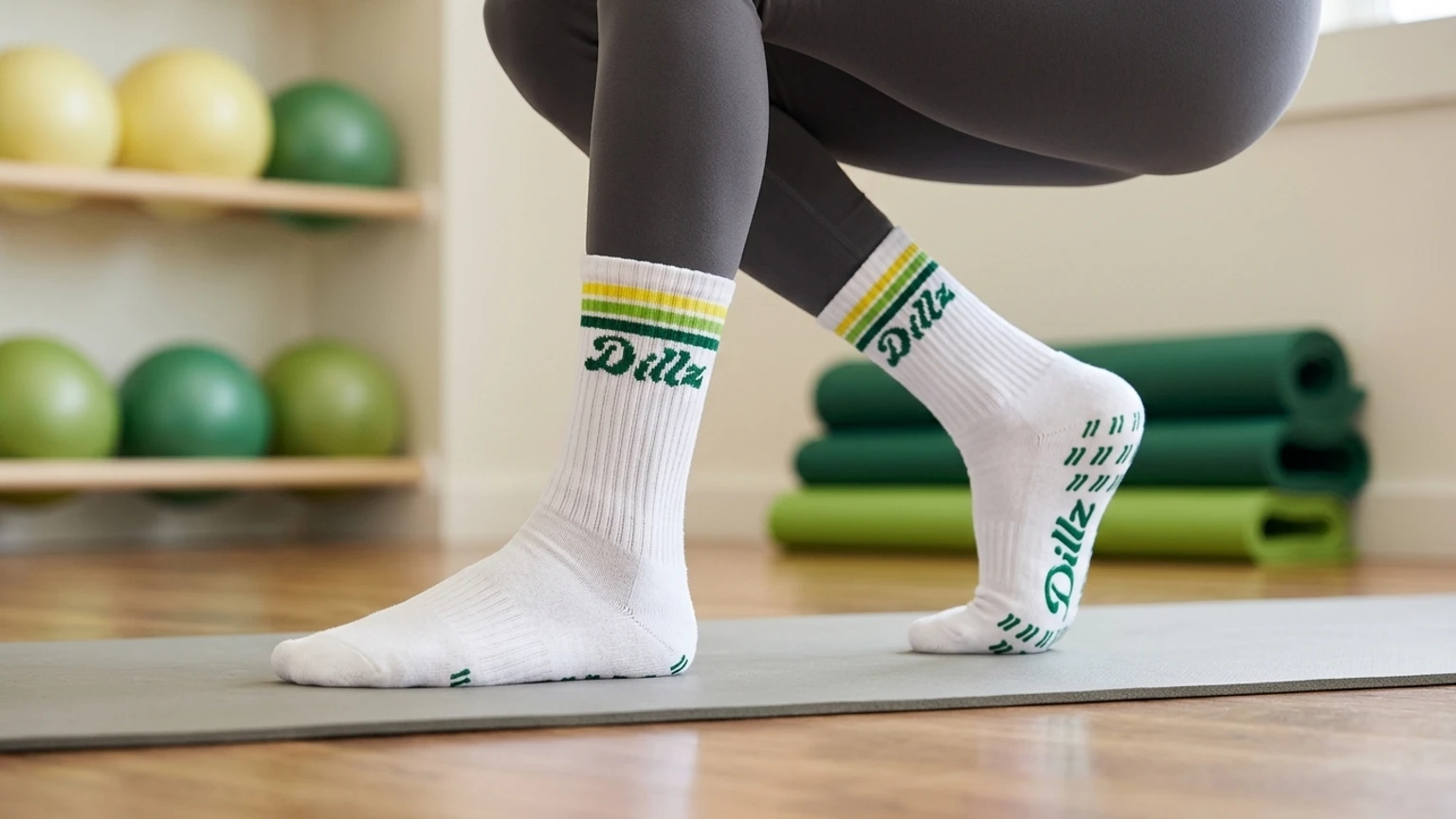
Good example: continuous full-sole DillzGrip coverage extending from the heel through the forefoot.
Poor example: isolated rubber patches under the forefoot, with no clear grip beneath the heel or arch.
The distinction matters when a Pilates sock becomes part of a pickleball or tennis setup. Studio-focused socks are often designed for controlled movements on a floor. Court players add lateral shuffles, quick stops, and split steps inside footwear. Full-sole coverage is the more practical choice when the intended use extends beyond Pilates.
Compare the same feature across Tavi’s full-sole studio grip socks, Pointe Studio’s studio grip collection, OS1st’s low-profile grip system, and Squid Socks’ pickleball grip zones. Their product positioning differs, so inspect coverage rather than assuming a Pilates-focused design will perform the same way inside court shoes.
Players who experience rubbing can also review ways to prevent hot spots on the pickleball court, since sock movement and friction often appear together.
3. Step two: Test whether the sock shifts during controlled movement
Put the sock inside the actual shoe you plan to wear. Perform slow heel raises, side steps, split-stance weight shifts, 10 lateral shuffles, and one quick stop. Watch for bunching under the arch, heel lift, toe crowding, or fabric sliding toward one side.
A sock can feel secure on a studio floor and still move inside a court shoe. Test the sock-to-shoe interface separately from the shoe’s outsole grip on the court. That distinction is central to understanding what grip actually does inside your shoe.
A passing result feels uneventful. The foot stays settled, the heel remains seated, and the wearer does not need to tighten the laces excessively or stop to adjust the sock. If the heel slips repeatedly or the forefoot shifts during moderate movement, stop testing that pair. More surface stickiness will not correct an unstable in-shoe fit.
4. Step three: Check compression, breathability, and court-shoe fit
Wear the pair for a full Pilates class or practice session. Check whether the arch feels supported, whether a seam creates pressure, and whether heat or moisture builds up. Then lace the court shoe fully and repeat a walk, split step, shuffle, and stop.
Extra grip and thick fabric can become uncomfortable when they reduce the space inside a well-fitting shoe. Look for noticeable arch support without tight cramping, breathable construction, and enough room for relaxed toes. Pilates instructor Lesley Logan discusses construction, durability, and ventilation differences in “Should You Use Grip Socks When Doing Pilates?”.
Dillz Grippy Grippy™ Crew and Ankle socks are an adjacent option for players who want full-sole grip inside court shoes, breathable comfort, targeted arch support, and coastal court style. Dillz describes the Crew blend as 70% cotton, 28% polyester, and 2% spandex, with full-sole DillzGrip traction. The Ankle style provides a lower-cut fit for players who prefer less fabric around the calf. Three-pack options suit frequent players who rotate socks across practices and matches.
| Check | Pass threshold | What the result means |
|---|---|---|
| Sole coverage | Continuous traction across heel and forefoot | Favor full coverage for studio-to-court use |
| In-shoe movement | Minimal forefoot shift during 10 lateral shuffles | Reject pairs that bunch or slide |
| Compression | Noticeable arch support without cramping | Keep support, remove pressure |
| Breathability | Cotton blend or clear breathable or moisture-wicking claim | Better for full practices |
| Court-shoe fit | Relaxed toes and seated heel after lacing | The sock works with the shoe |
If the sock changes a comfortable shoe into a restrictive one, stop there. Grip socks support a properly fitted shoe; they do not correct poor shoe fit. Players who prefer less coverage can compare ankle grip socks for court shoes.
Key Takeaways
- Inspect for continuous heel-to-forefoot grip before buying.
- Test 10 lateral shuffles and a quick stop inside the actual shoe.
- Keep arch compression noticeable but comfortable.
- Stop using a pair if heel slip or moderate fabric shifting persists.
The useful buying question is whether the sock remains stable inside court shoes after a full class or practice. Dillz Grippy Grippy™ Crew and Ankle socks apply that court-focused test to full-sole grip, breathable comfort, and targeted support. Find the Grippy Grippy™ pair for your game. - Shop grip socks
Frequently Asked Questions
What are the best non-slip socks for Pilates?
The best pair has continuous sole coverage, stays in place during controlled movement, and remains comfortable through a full class. For players who also use court shoes, choose non slip grip socks for Pilates that pass the in-shoe shuffle test rather than judging studio-floor stickiness alone.
Should you wear grippy socks for Pilates?
Wear them when they improve stability, comfort, or the studio’s footwear experience. A good pair should feel secure without bunching, overheating, or crowding the toes.
How do you keep Pilates socks grippy?
Follow the care instructions and use the recommended washing and drying method. Pilates instructor Lesley Logan explains that proper washing and drying can help preserve grip over time, making care part of the buying decision.
Can I do reformer Pilates without grippy socks?
Yes, when the studio permits it. Reformer Pilates policies vary, so follow the instructor’s or studio’s footwear rule and use grippy socks when the equipment or class policy calls for added foot stability.