Best Grip Socks for Pilates: A Studio-to-Court Buyer’s Guide
Find the best grip socks for Pilates, from studio-first styles to pickleball crossover options. Compare fit, traction, comfort, and coverage.
On this page
- Best Grip Socks for Pilates: the short answer for studio-to-court players
- Choose for the movement, not the class label
- Run two separate grip checks before buying
- What makes a grip sock comfortable after class and after a match?
- How do Dillz and studio-focused alternatives compare?
- Key Takeaways
- Frequently Asked Questions
The best grip socks for Pilates combine non-slip sole coverage, a close fit, breathable comfort, and secure toe and heel placement. For players who move from Pilates to pickleball, choose a crossover pair that reduces foot movement inside a properly fitted court shoe without treating the sock as a replacement for outsole traction.
Best Grip Socks for Pilates: the short answer for studio-to-court players
Grip socks help with controlled foot placement, reformer work, balance, and transitions on a studio floor. Some studios require them. For example, Club Pilates says grip socks are required for every class, although policies vary by studio (Club Pilates).
The crossover buyer has a second test: how the sock behaves inside a court shoe during split steps, lateral movement, quick stops, and repeated weight shifts. A grip pattern can improve contact between the foot and sock, while a close fit and targeted arch support can help limit unwanted movement between the sock and shoe.
Studio-floor traction and shoe-internal grip solve different problems. The grip sock works between your foot and the shoe. The court shoe outsole handles traction against the pickleball or tennis court.
| Use case | Priority | Best fit |
|---|---|---|
| Reformer Pilates | Controlled foot placement and floor grip | Full-coverage silicone, PVC, or comparable grip |
| Mat Pilates | Barefoot comfort and stable transitions | Breathable ankle or low-rise grip sock |
| Barre-style holds | Traction during static positions | Grip across the ball, heel, and arch |
| Pilates plus pickleball | Studio traction and reduced movement inside shoes | Full-sole grip, arch support, and a breathable close fit |
For shoppers comparing the best grip socks for Pilates, the right choice depends less on the class name and more on the movement, floor, and shoe that follow.
Choose for the movement, not the class label
Reformer footwork is controlled and repetitive. Mat Pilates asks for easy movement between kneeling, standing, and seated positions. Barre-style holds place more demand on balance and sustained contact with the floor. Pickleball adds lateral movement, split steps, quick stops, and frequent changes in body weight.
That difference changes what comfortable means. A soft studio sock may feel excellent during a slow Pilates sequence but bunch under the toes inside a snug court shoe. A thick cuff may feel supportive during barre work but create pressure during a longer match. A small grip pattern may work on a dry studio floor while offering too little contact between the foot and shoe.
Use this decision rule:
- Choose studio-only socks when Pilates is the only use and the studio requires or strongly recommends grip socks.
- Choose court-only socks when the main concern is foot movement inside pickleball or tennis shoes.
- Choose a crossover pair when one sock needs to move from reformer work to court sessions without creating bulk or changing the shoe fit.
A grip sock cannot correct a court shoe that is too large, too wide, or poorly fitted. A good setup is a close-fitting sock with full-sole traction inside a properly sized shoe. A poor setup is a highly grippy sock used to compensate for heel lift or a forefoot that slides inside the shoe.
The operating rule is simple: fix shoe fit first, then use grip to reduce movement between the foot, sock, and insole.
Run two separate grip checks before buying
The first check is floor traction. Look at the sole pattern and grip material. Silicone and PVC are common materials used for studio traction, and Pointe Studio lists both among the materials used in its grip socks (Pointe Studio). Full-foot coverage is designed for activities such as Pilates, barre, and yoga, where the foot may load through different areas during a movement.
The second check is movement inside the shoe. A close fit, breathable construction, stable heel, and targeted arch support matter more than a bold sole pattern by itself. OS1st describes silicone grip pads as a way to help keep arch support from shifting, sliding, or bunching during activity (OS1st).
Before buying, check for:
- Non-slip sole coverage made with silicone, PVC, or a comparable grip material
- Arch support that feels secure without making the sock stiff
- Breathable fabric that will not feel overly warm during longer sessions
- Proper heel placement with no slipping
- Comfortable toe space without loose fabric
- Grip coverage under the areas used most during Pilates
- A close fit that works inside a properly fitted pickleball or tennis shoe
- No bulky seams or excess material inside the shoe
Use a practical stop condition: if the sock feels stable on the studio floor but causes pressure, bunching, or heat inside the court shoe, it is a studio sock rather than a crossover sock.
What makes a grip sock comfortable after class and after a match?
Fabric breathability becomes more important as sessions get longer. Cotton can provide a familiar soft feel, while synthetic fibers can add stretch, durability, and moisture management. The best blend depends on the fit and construction, not the fiber label alone.
Seam placement also affects comfort when a court shoe fits closely. A toe seam that presses against the foot can become distracting during a match, even if the sock feels fine during a short Pilates class. Cuff height is a personal choice, but the cuff should stay in place without digging into the leg. Arch support should create a held-in feeling without adding unnecessary compression or bulk.
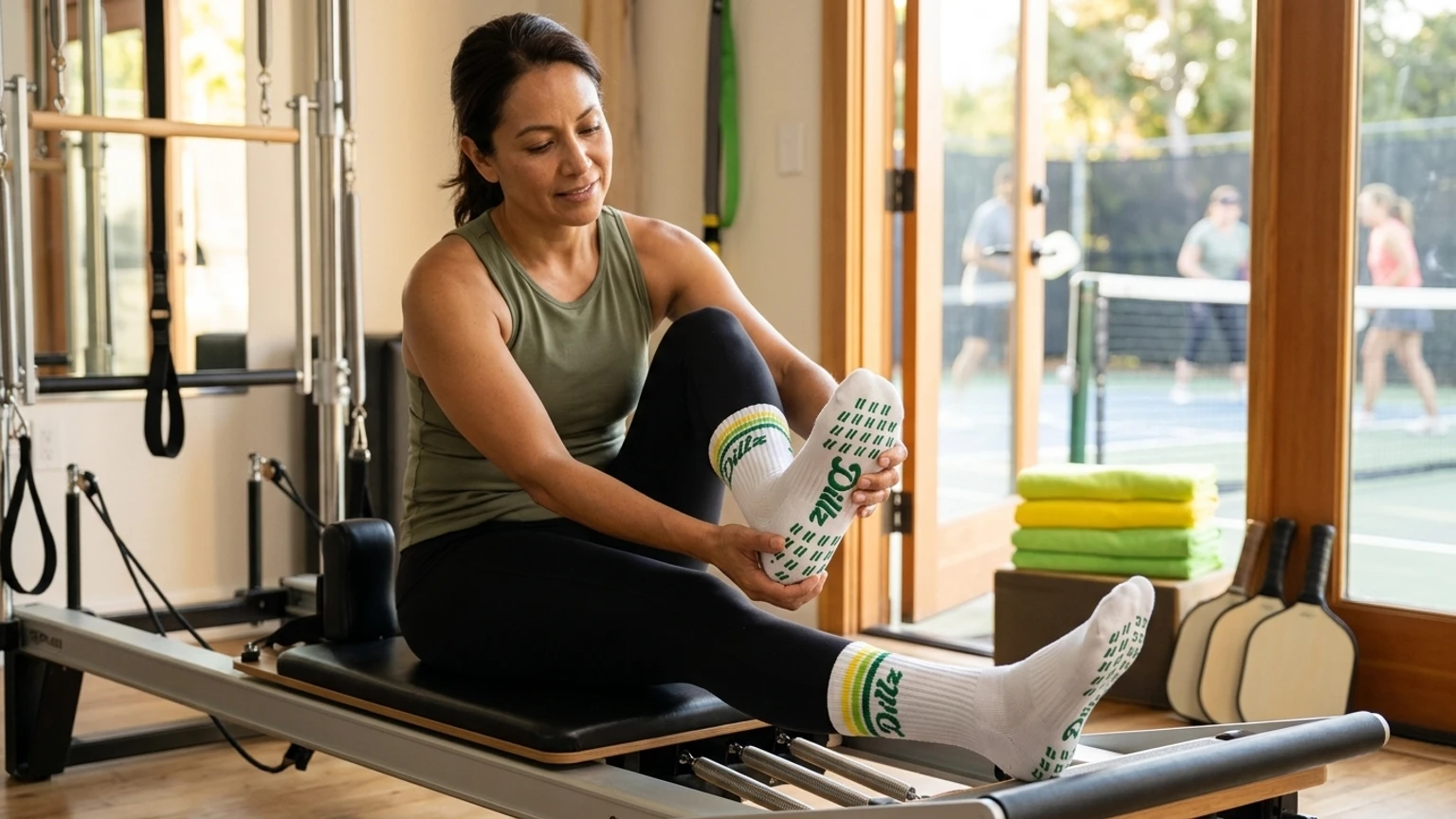
Dillz Grippy Grippy socks are positioned as a pickleball-first option for players who also want a Pilates-compatible grip sock. The line combines full-sole traction, breathable construction, and targeted arch support for movement inside court shoes (Dillz Grippy Grippy Crew). The Crew offers more coverage around the ankle and lower leg, while the Ankle style suits players who prefer a lower cut.
Grip life also depends on care. Follow the care label, wash with like colors, avoid fabric softener, and limit excessive dryer heat when the instructions allow. Rotating pairs can also reduce how often one pair is washed and worn.
Occasional Pilates attendees may only need one studio-focused pair. Players who train, play league matches, or use the same socks for studio and court sessions have a stronger reason to keep multiple pairs in rotation.
How do Dillz and studio-focused alternatives compare?
Dillz Grippy Grippy Crew and Ankle socks are designed around the crossover problem: reducing unwanted movement inside a well-fitting court shoe while providing a grip surface that can also work for studio sessions. The full-sole DillzGrip traction is intended for stops, starts, split steps, and direction changes, while the different cuff heights let players choose between more coverage and a lower-profile feel (Dillz pickleball grip socks).
Studio-focused alternatives may make more sense when the court shoe is not part of the decision:
| Brand or option | Best fit for | What to compare |
|---|---|---|
| Tavi | Studio shoppers who want several sock heights | Low-rise, ankle, crew, and knee-high styles |
| Pointe Studio | Pilates, barre, and yoga users comparing grip coverage | Full-foot versus heel-toe grip and fabric construction |
| OS1st Orthotic Sock | Users prioritizing an orthotic-style fit | Low-profile construction and support that stays positioned |
| Dillz Grippy Grippy | Pilates users who also play pickleball | Full-sole traction, court-shoe fit, and cuff height |
The comparison is not simply about which sole feels most adhesive. A sock can have strong floor grip and still feel uncomfortable inside a narrow court shoe. Conversely, a court-oriented sock may reduce shoe-internal sliding but offer a cuff or fabric feel that is less appealing for studio use.
For the best grip socks for Pilates and pickleball, compare four things in order: floor traction, shoe-internal fit, breathability, and the movement you perform most often.
Key Takeaways
- Choose full-sole grip when Pilates includes reformer work, balance, or transitions that require controlled foot placement.
- For Pilates plus pickleball, prioritize a close fit, breathable fabric, stable heel, and full-sole traction inside a properly fitted court shoe.
- Fix shoe fit before relying on grip socks to reduce movement.
- Tavi and Pointe Studio suit studio-first shoppers, while Dillz is designed around the Pilates-to-court crossover use case.
If your Pilates routine leads directly to pickleball, compare the Dillz Crew and Ankle styles by cuff preference, shoe volume, and how much coverage feels comfortable. Shop grip socks.
Frequently Asked Questions
What are the best grip socks for Pilates?
The best pair has non-slip sole coverage, a close fit, breathable fabric, comfortable toe construction, and a secure heel. For Pilates and pickleball, add full-sole grip and arch support to help reduce foot movement inside a properly fitted court shoe.
Should you wear grippy socks for Pilates?
Yes, when the studio requires them or when extra floor traction improves confidence during reformer, mat, or barre-style movements. Club Pilates requires grip socks for its classes, while other studios set their own policies (Club Pilates).
What kind of socks are best for Pilates?
Choose breathable grip socks with silicone, PVC, or comparable traction, a secure heel, comfortable toe space, and support that does not feel restrictive. The best cuff height depends on personal preference and whether the sock will also be worn inside a court shoe.
Are full-sole grip socks better for Pilates?
Full-sole grip socks provide traction across more of the foot and are useful for Pilates movements that load through the heel, ball, arch, or toes. Pointe Studio describes full-foot grip as a fit for dynamic studio activities such as Pilates, barre, and yoga (Pointe Studio).
What are some good brands of grip socks for Pilates?
Tavi, Pointe Studio, and OS1st offer different studio-focused options, while Dillz suits buyers who want a Pilates-compatible sock with a pickleball-first court use case. Compare grip coverage, fit, support, cuff height, and intended activity rather than choosing by brand name alone.
Why do Pilates socks lose their grip?
Grip can wear down from repeated friction, high heat, fabric softener, and frequent washing. Follow the care label, avoid fabric softener, limit excessive dryer heat, and replace the pair when the grip becomes visibly worn or no longer supports controlled foot placement.