Silicone Grip Socks for Pickleball and Tennis: What to Look For
Compare silicone grip socks for pickleball and tennis by coverage, comfort, fit, and breathability, then choose the right pair.
On this page
Silicone grip socks can reduce sock-to-insole movement inside a properly fitting pickleball or tennis shoe, helping the foot feel more settled during quick stops and lateral movement. They do not create traction against the court, so the right choice still depends on grip placement, comfort, breathability, and compatibility with the shoe.
What silicone grip socks do inside a court shoe
Grip on the bottom of a sock works between the foot, sock, and insole. During a split step, shuffle, or sudden stop, silicone can help keep the sock from sliding across the shoe’s footbed. That matters when the complaint is, “My foot feels like it is moving inside my shoe.”
Silicone grip socks cannot correct every movement problem. A loose shoe, worn insole, excess fabric, or incorrect size can create the same sensation. Start with the shoe: the heel should feel held, the toes should have room to move, and the sides should not feel compressed.
Pickleball is a clear use case because players repeatedly reset at the kitchen line, shuffle laterally, and stop during short bursts. Tennis players face similar internal movement during split steps, baseline recovery, and side-to-side coverage. Players comparing indoor court options can also review this guide to non-skid socks for indoor pickleball.
The sock handles movement inside the shoe. The outsole handles movement against the court. Pickleball Warehouse explains that appropriate outsole tread is essential for pickleball stability and traction. A grippy sock supports the shoe’s fit, but it cannot replace a court shoe with suitable tread.
How grip placement changes feel, stability, and comfort
Full-sole grip covers more of the contact area from heel to toe. It creates a more noticeable connection with the insole during split steps, pivots, and lateral shuffles. Partial or patterned grip uses silicone in selected zones, such as the heel, forefoot, or arch, so the sock can feel less prominent during ordinary movement.
The choice depends on where movement occurs. A player whose sock slides under the forefoot may prefer broader coverage. Someone who mainly experiences heel lift may prefer heel-focused grip. A player who dislikes a firmly anchored sensation may find patterned coverage more comfortable.
Peter von Panda demonstrates the basic material behavior in How To Add Grip To Socks. His home-sock demonstration shows that a silicone-like coating can make fabric resist sliding under light pressure. It helps explain the mechanism, but it does not test court performance, durability, or injury prevention.
| Grip layout | Likely feel | When to choose it |
|---|---|---|
| Full sole, heel to toe | Most noticeable contact with the insole | Sock movement occurs across much of the foot |
| Heel and forefoot pads | Targeted hold with less total coverage | Movement is concentrated in two areas |
| Heel-only grip | Lightest intervention | The main issue is heel lift or no-show movement |
| Patterned silicone zones | Balanced contact and flexibility | You want hold without a fully anchored feel |
A useful fit test is simple: the sock should feel stable without making the shoe feel smaller. Pressure points, toe restriction, or bunching indicate a mismatch between the sock, shoe, or insole.
Choosing grip socks for pickleball versus tennis shoes
Pickleball players should first consider socks that feel stable during short bursts, lateral shuffles, quick stops, and repeated kitchen resets. That need applies to recreational and league play, especially when unwanted movement becomes noticeable late in a session. Tennis players can use the same framework for baseline recovery, split steps, and side-to-side coverage. Padel has similar movement demands, while baseball and flag football players may value internal foot stability for different reasons.
Shoe compatibility matters more than the grip label. A full-sole design can feel uncomfortable inside an already tight shoe. A poorly sized shoe can still allow movement even when the sock has substantial grip. A mismatched or worn insole can also create uneven pressure under the heel or forefoot.
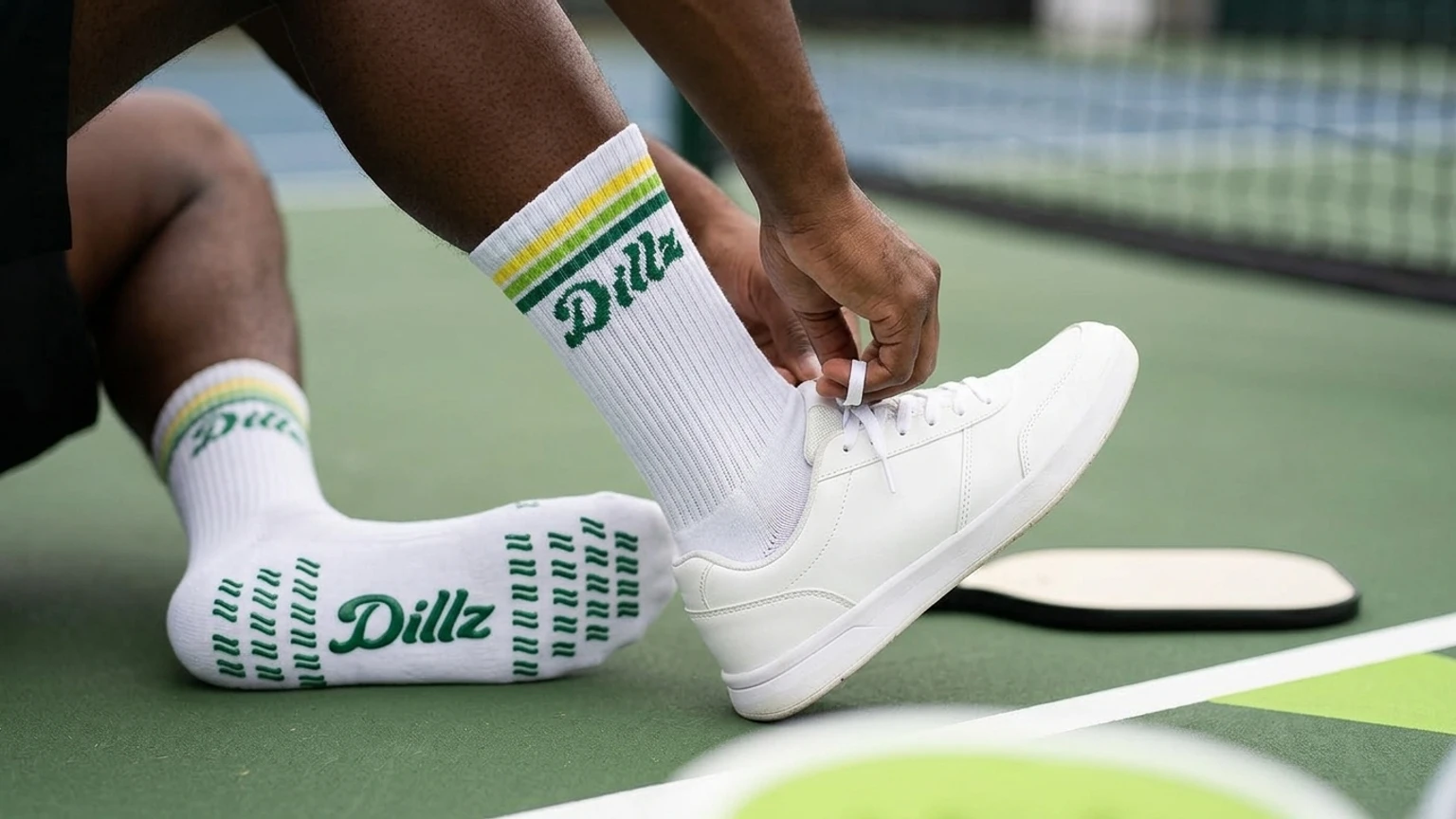
Dillz Grippy Grippy Crew gives pickleball players an option built around full-sole grip, breathable comfort, targeted arch support, and a crew height. Dillz Grippy Grippy Ankle offers the same broad direction in a low-cut format for players who prefer less fabric around the ankle. The ankle grip sock guide helps clarify when a lower cuff suits a court shoe.
These socks address movement inside the shoe. Court traction still comes from the outsole, especially when a tennis shoe is used for pickleball and lacks sport-specific lateral support or tread.
What to compare before buying non-slip court socks
Use the following framework before choosing a pair. The strongest marketing claim matters less than how the sock fits your shoe, movement pattern, and playing conditions.
| Buying factor | What to inspect | Decision rule |
|---|---|---|
| Silicone coverage | Full sole, heel and forefoot, heel only, or patterned zones | Choose coverage based on where the sock actually moves |
| Breathability | Lightweight knit, ventilation, and moisture management details | Prioritize airflow for warm courts or long sessions |
| Arch support | Targeted support, compression, or a neutral fit | Choose support that complements the shoe rather than filling a sizing problem |
| Cushioning | Underfoot padding and heel structure | Avoid extra bulk if the shoe already fits closely |
| Height and sizing | Crew or ankle cuff, size range, and shoe opening | Match the cuff and size to the court shoe |
| Care instructions | Washing, drying, bleach, and heat guidance | Follow the label to protect both knit and silicone |
| Pack format | Single pair or multi-pair option | A three-pack suits players who rotate socks between sessions |
Dillz is pickleball-first. Tavi describes its full-sole grip socks for Pilates, yoga, and studio work. Pointe Studio lists full-foot silicone grip and compression arch support. OS1st’s grip-sock construction uses a hypoallergenic silicone oval at the back of the heel and a y-gore construction, according to OS1st’s grip-sock construction. Its Nekkid Comfort line also describes grip intended to prevent slipping inside shoes. SOXPRO uses silicone arrow pads on the sole and heel in its Grip:IN system.
Squidsocks.ink may also appear in product research, but buyers should verify its coverage, fabric, support, and intended sport before assuming it is designed for pickleball. For a broader selection process, compare the best court socks for pickleball and review regular court socks versus grip socks.
The manual workflow takes only a few minutes: wear the sock in the usual court shoe, walk indoors, perform a few controlled split steps, check for bunching, then inspect pressure around the heel, arch, and toes. Stop treating grip as the fix if the shoe itself feels loose, cramped, or unstable. Players who need a care routine can follow this guide to wash grip socks and keep them court-ready.
Key Takeaways
- Grip socks can reduce sock-to-insole movement inside a well-fitting court shoe.
- Full-sole coverage creates a more noticeable locked-in feel, while partial grip targets specific movement.
- Court traction comes from the shoe outsole, not the sock.
- Choose coverage, breathability, support, height, sizing, and care requirements together.
Dillz gives pickleball and tennis players a court-focused option when the bottleneck is unwanted movement inside a properly fitting shoe. Compare the grip pattern and feel against the way you move, then choose the design that supports comfort without crowding the shoe. Shop grip socks.
Frequently Asked Questions
Are silicone grip socks good for pickleball?
Yes, they can reduce sock-to-insole movement during pickleball stops, split steps, and lateral shuffles. They work best when the court shoe fits correctly and already has suitable outsole traction.
Do silicone grip socks improve traction on the court?
No. They improve contact between the sock and the shoe’s insole. Traction against the court comes from the outsole and its tread pattern.
Should grip socks feel tight inside tennis or pickleball shoes?
They should feel secure and smooth, without toe pressure, bunching, or painful compression. If the shoe is already cramped, a tighter-feeling sock will not solve the fit problem.
Are full-sole silicone grips better than partial grips?
Full-sole grips suit players who want consistent contact from heel to toe. Partial or patterned grips can feel less noticeable when movement is limited to the heel or forefoot.
How should silicone grip socks be washed and cared for?
Follow the care label for temperature, bleach, and drying instructions. Silicone placement, fabric, and construction vary, so one washing routine should not be assumed to work for every pair.