Most Comfortable Pickleball Shoes: How to Choose a Pressure-Free Court Setup
Find the most comfortable pickleball shoes by comparing fit, support, ventilation, and grip socks for a more settled court setup.
On this page
Most comfortable pickleball shoes come from a complete court setup, not cushioning alone. Pressure-free fit, breathable materials, stable lateral support, fatigue control, and limited foot movement inside the shoe all shape comfort during split steps, kitchen-line exchanges, and long rallies.
What makes a pickleball shoe comfortable beyond cushioning?
The wrong default is choosing the softest midsole and assuming the shoe will feel comfortable in motion. A plush shoe can still create toe pressure, heel slip, trapped heat, or instability when a player recovers from a wide ball.
A more useful comfort scorecard includes:
- Forefoot room: Toes should spread without pressing into the front or sidewalls.
- Heel hold: The heel should stay seated during split steps and lateral pushes.
- Ventilation: Breathable upper materials help manage heat during extended sessions.
- Cushioning: The midsole should absorb impact without making the platform feel unstable.
- Court stability: The shoe should support side-to-side movement without feeling rigid or intrusive.
- Fatigue control: Support should remain useful late in a match, when foot placement becomes less precise.
- Sock interaction: The foot should feel settled inside the shoe during stops and direction changes.
This scorecard explains why one player praises a model while another abandons it. Rackets & Runners makes the same foot-shape point in “Our TOP 6 most COMFORTABLE pickleball shoes right now!!”, describing the ASICS Solution Speed FF4 as a relatively narrow option despite added toe-box room.
Players comparing footwear with the rest of their setup can use this pickleball equipment guide to evaluate shoes, socks, paddles, balls, and court accessories together.
How fit, ventilation, and lateral support affect long pickleball sessions
A shoe can feel excellent while standing at the baseline and become uncomfortable at the kitchen line. Repeated split steps expose heel movement, wide-ball recovery exposes weak lateral structure, and long rallies reveal heat buildup or pressure points.
Sizing should begin with foot shape rather than a universal rule. Narrow-footed players often prefer a closer upper and contained heel. Medium-width players usually need a balance between room and hold. Wide-footed players should pay close attention to toe-box pressure, especially when the upper has limited stretch. The same model can feel secure on one foot and restrictive on another.
Use this manual fit test before judging the cushioning:
- Try the shoe with the socks used for actual play.
- Bend into a split-step position and check whether the toes press forward.
- Shuffle side to side and notice heel lift or internal sliding.
- Perform several controlled stops, then inspect for rubbing.
- Keep the shoe on long enough for the foot to warm up.
A good result feels secure without demanding attention. A bad result is a roomy shoe with a sliding heel, or a stable shoe that presses the forefoot on every recovery step. Players who develop hot spots should also review these anti-blister sock practices, since friction can make an otherwise suitable shoe unusable.
Support also involves a tradeoff. Heavier construction can offer more structure and fatigue control, while a lighter shoe can feel quicker during short reactions. The right choice depends on which problem appears first during play.
Why the sock inside the shoe can change perceived comfort
Shoe-to-court traction and grip inside the shoe perform different jobs. The outsole controls contact with the court. A grippy sock works between the foot and the shoe, helping reduce unwanted movement when the shoe already fits correctly.
That distinction matters during a kitchen-line exchange. If the foot slides inside the shoe, the player can feel late even when the outsole grips the surface well. A sock cannot create room in a narrow toe box or repair a loose heel. It can help address movement within an otherwise appropriate fit.
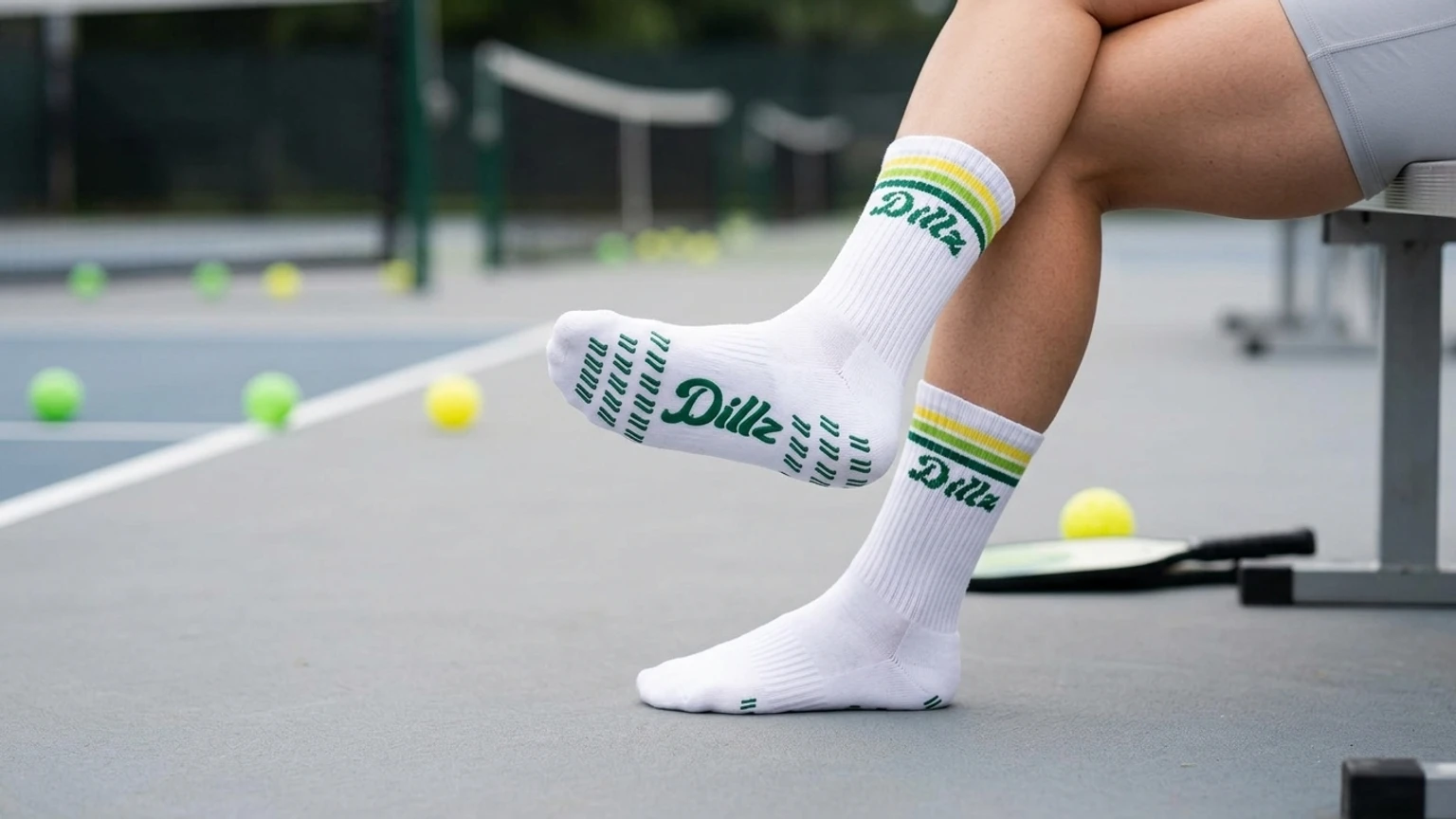
Dillz Grippy Grippy™ Crew and Ankle socks add a useful comparison variable to footwear selection. Full-sole DillzGrip traction is designed to limit internal slipping, while DillzAir fabric supports breathable comfort. Targeted ArchHug support gives recreational and league players 30+ another factor to consider when they want a more settled feel during quick stops and lateral movement.
The manual workflow is straightforward:
- Fit the court shoe using foot shape and movement needs.
- Test the shoe with regular court socks.
- Repeat the split-step, shuffle, and stopping tests with a full-sole grip sock.
- Keep the grip sock only if it improves stability without creating pressure or heat.
- If the shoe still pinches or slips, replace the shoe rather than expecting the sock to correct it.
Players who want to understand the distinction in more detail can read about what non-slip socks do inside a pickleball shoe. Those who prefer less coverage around the ankle can compare an ankle-height grip sock guide.
Comparing cushion-first shoe picks with a more settled setup
The most comfortable pickleball shoes depend on the tradeoff a player is trying to solve. The table below uses documented construction and review evidence rather than assigning one universal winner.
| Shoe or setup | Documented comfort factors | Main tradeoff | Choose it when |
|---|---|---|---|
| Diadora Blushield Torneo 3 | Breathable mesh and an 8.9 comfort rating in a Tennis Warehouse review | The same review reports foot sliding after short play | Plush comfort matters, but heel hold can be verified carefully |
| ASICS Solution Speed FF4 | FLYTEFOAM midsole for lightweight cushioning and energy return, according to the product listing | Narrower fit than many wide-foot players need | Speed and a lighter response matter more than maximum room |
| Skechers Viper Court Pro 2.0 | Breathable mesh, Arch Fit EVA insole, ULTRA GO Foam, and Goodyear Gold outsole from the product specifications | More structured feel | Arch-oriented support and cushioning are priorities |
| Wilson Pickle Pro | Midfoot Saddle lateral stability and Duralast rubber outsole, according to a Wilson Pickle Pro review | A more supportive platform | Side-to-side stability decides the purchase |
The useful contrast is specific: citing Diadora’s 8.9 comfort rating gives a player evidence to investigate, while calling any shoe “the most cushioned” without a verified comparison turns preference into an unsupported ranking.
A well-fitting shoe paired with a full-sole grip sock changes the decision in a narrower way. The sock may reduce foot movement and help the shoe feel more settled, but it does not replace forefoot room, ventilation, or lateral support. Indoor players can also compare non-skid socks for indoor pickleball, especially when court surface and sweat affect internal movement.
Key Takeaways
- Comfort depends on fit, ventilation, lateral support, fatigue control, and sock interaction.
- Test shoes during split steps, lateral shuffles, and stops instead of judging them while standing still.
- A full-sole grip sock can reduce internal movement when the court shoe already fits properly.
- Stop relying on cushioning alone when the heel slips, the forefoot feels compressed, or heat changes movement.
A pressure-free setup starts with the shoe and ends with the layer inside it. Players who have confirmed their shoe fit and still feel unwanted movement can Shop grip socks.
Frequently Asked Questions
What shoes do podiatrists recommend for pickleball?
There is no single podiatrist-approved shoe for every foot. Look for a roomy toe box, secure heel hold, breathable upper, appropriate cushioning, and stable lateral support. Persistent pain, numbness, or swelling calls for professional evaluation rather than a shoe change alone.
What pickleball shoe has the most cushion?
The available evidence supports different cushioning approaches rather than one universal maximum. Diadora’s Torneo 3 has an 8.9 comfort rating in its review, while ASICS uses a lightweight FLYTEFOAM midsole and Skechers uses ULTRA GO Foam. The deciding factor is whether the cushioning remains stable during lateral movement.
What are the best shoes for pickleball?
The best shoes match the player’s foot shape, movement style, and support needs. ASICS suits players seeking a lighter response, Skechers and Wilson emphasize structured support, and Diadora is a comfort-focused option that still requires a heel-slip check. The most comfortable pickleball shoes are the ones that remain pressure-free and stable late in play.
Is there a difference between a tennis shoe and a pickleball shoe?
The categories overlap because both sports require lateral support, court traction, and durable outsoles. Pickleball shoes often emphasize short recoveries and kitchen-line movement, while tennis shoes may be designed around longer baseline patterns. Either category can work when the fit, outsole, ventilation, and support match the player’s court demands.