Babolat Pickleball Shoes: How to Choose the Right Grip-Sock Setup
Babolat pickleball shoes work best with the right fit and sock grip. Learn how to reduce internal movement, test traction, and choose your setup.
On this page
Babolat pickleball shoes can work well for players who need a stable court shoe with dependable lateral support, but the shoe is only one part of a settled setup. The fit between foot, sock, and shoe affects how confidently a player handles split steps, kitchen-line resets, and repeated side-to-side stops. The right grip-sock choice helps solve movement inside the shoe without pretending to replace outsole traction.
What matters after you choose your court shoe
Choosing a court shoe usually starts with the outsole, cushioning, width, and support. Those details matter because pickleball involves repeated lateral stops, short recovery steps, and quick changes of direction. Tennis players often bring a tennis-court shoe into pickleball, while pickleball players typically want a setup that feels responsive during compact movements near the kitchen.
The next question is what happens inside the shoe.
A shoe can fit well on paper while the foot still shifts during play. The heel may lift slightly, the sock may bunch beneath the arch, or the forefoot may slide forward when the player brakes. Those small movements can make a shoe feel less connected to the body, especially during long rallies or repeated drills.
That is the focus here: reducing unwanted movement between the foot, sock, and shoe. It is not a ranking of Babolat models. Jet Mach, Propulse, SFX, and other court shoes can feel different from one player to another because foot shape, sock thickness, court surface, and playing style all change the result.
Players comparing non-skid socks for indoor pickleball should treat the sock as part of the complete court setup. The right combination should feel secure without creating pressure, heat, or restricted movement.
Separate sock grip from shoe-to-court traction
Full-sole grip inside a sock addresses movement between the foot, sock, and shoe. The shoe outsole addresses contact between the shoe and the court. These are separate friction points, and one cannot replace the other.
Signs the issue is inside the shoe
Internal movement often feels like:
- The heel shifts even though the laces are snug.
- The sock bunches under the arch or near the toes.
- The foot slides forward during a stop.
- The shoe feels loose only during lateral movement.
- The player keeps adjusting the sock between rallies.
A grip sock can help create a more settled interface inside a well-fitting shoe. It does not correct a shoe that is too large, too narrow, or poorly suited to the player’s foot.
Signs the issue is shoe-to-court traction
Court traction problems feel different:
- The outsole slips during a plant.
- The shoe slides while changing direction.
- The player loses confidence on dusty or polished areas.
- The tread looks worn or the sole is carrying debris.
- The shoe is designed for a different surface.
A grip sock will not fix an outsole that is dirty, worn, or inappropriate for the court. Before changing socks, clean the outsole and check whether the shoe is made for the surface being played. Players who want a deeper explanation of internal sock movement can review what non-slip socks actually do inside a pickleball shoe.
View this post on Instagram
A fit-first check for Babolat court shoes
A simple test can reveal whether the shoe, sock, and foot are working together.
Start at home with the actual socks intended for play. Stand normally and check that the heel stays seated without the laces being painfully tight. The toes should have room to move, but the foot should not slide forward when the player bends the knees. The midfoot should feel held by the shoe rather than squeezed by it.
Next, walk side to side on a clean, stable surface. Pay attention to the heel, arch, and forefoot. A good fit feels secure when the body moves laterally. It does not require constant lace adjustments or toe gripping.
Then repeat the test with the court sock that will be worn during play. Sock thickness can change the volume inside the shoe. A thicker regular court sock may reduce extra space, while a thinner grip sock may create a different feel around the heel and forefoot. Full-sole grip can also make the foot feel more anchored, which may reveal that the original shoe fit was slightly loose.
Take the setup onto the court and test controlled split steps, lateral shuffles, and short stops before playing a full session. If discomfort develops quickly, separate the causes. Pressure usually points to fit or compression. Heat can point to fabric or shoe breathability. Movement can point to sizing, lacing, or the sock-and-shoe combination. Players prone to hot spots can also compare anti-blister socks for pickleball before changing shoes.
How to choose pickleball socks for a settled feel
Regular court socks remain a sensible choice when the shoe already holds the foot securely and the player values familiar cushioning and ventilation. Pickleball grip socks become more relevant when the foot or sock shifts during play, especially during frequent lateral stops.
| Sock setup | Best fit for | What to check | Tradeoff |
|---|---|---|---|
| Regular court sock | A secure shoe fit with little internal movement | Cushioning, breathability, and seam comfort | May not reduce sliding inside the shoe |
| Full-sole grip sock | Players who feel foot or sock movement during stops | Grip feel, sock thickness, and comfort | Can feel different inside a close-fitting shoe |
| Ankle grip sock | Players who prefer a lower profile around the leg | Heel hold and ankle coverage | Offers less coverage than a crew style |
| Crew grip sock | Players who want more coverage and a settled feel | Calf comfort, heat, and shoe volume | May feel warmer in some setups |
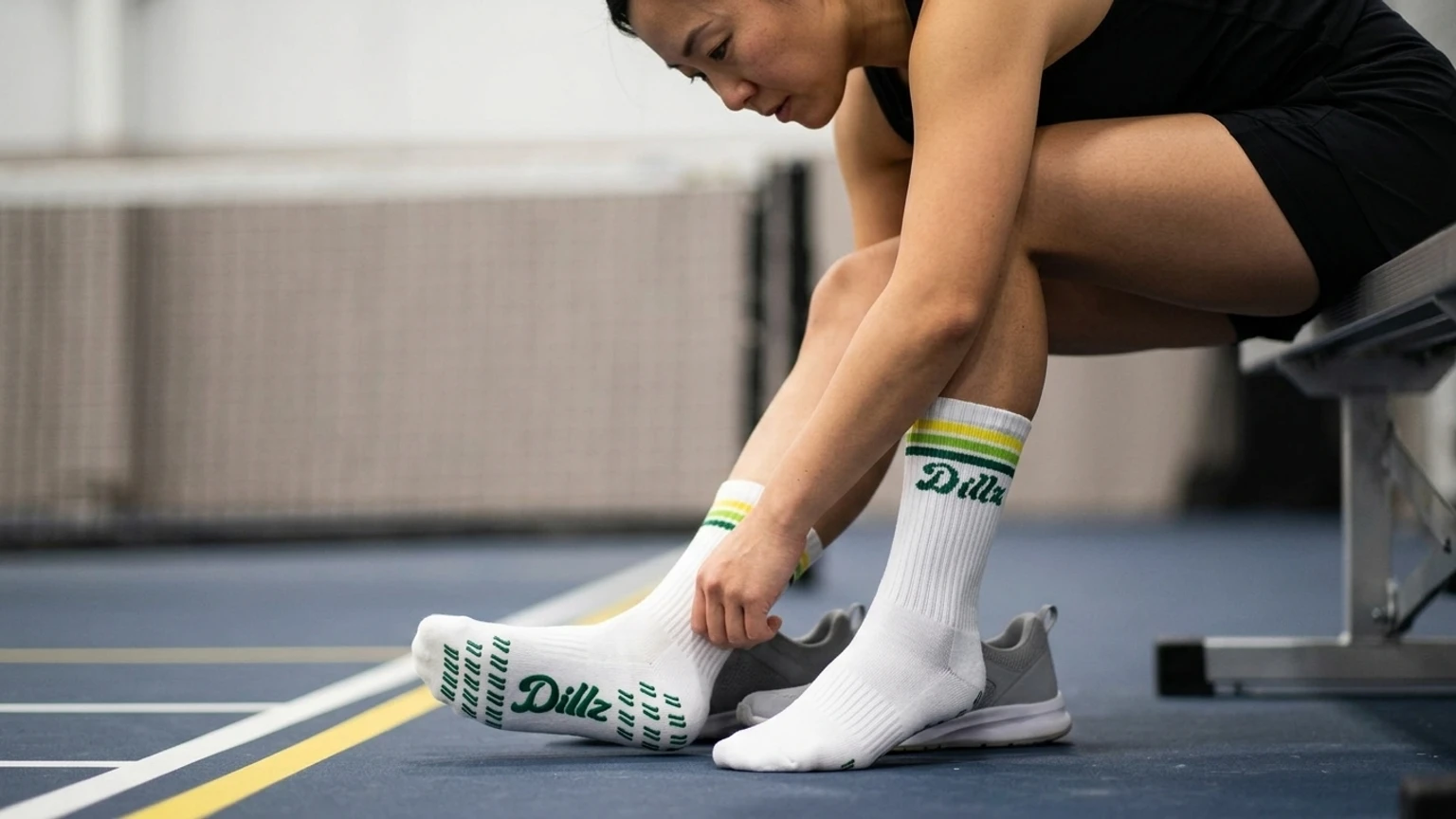
Dillz Grippy Grippy Crew and Ankle socks are designed for pickleball players 30 and older who play recreationally or in leagues several times a month and want more settled comfort inside a well-fitting court shoe. The combination focuses on full-sole grip, breathable comfort, and targeted arch support.
The decision should still be personal. Tavi, Pointe Studio, OS1st, and squidsocks.ink are alternatives buyers may consider, and each player should compare fit, fabric feel, coverage, and intended use rather than rely on an unsupported performance ranking.
Players who prefer a lower profile can explore ankle grip socks for pickleball. Those who want a broader checklist for fabric, support, and court use can compare the qualities of the best court socks for pickleball.
A quick setup checklist before your next session
Use this sequence before deciding that a shoe or sock is the problem:
- Confirm the shoe fit. Check heel hold, toe room, and midfoot security with the socks used for play.
- Inspect the outsole. Remove dust and debris, then look for worn tread or a surface mismatch.
- Choose the sock. Use a regular court sock when the foot already feels settled. Test a full-sole grip sock when internal movement remains.
- Run movement tests. Try split steps, lateral shuffles, short stops, and recovery steps before a full match.
- Identify the symptom. Change one variable at a time so the cause remains clear.
A quick troubleshooting guide can help:
- Foot movement inside the shoe: check size, lacing, and sock grip.
- Uncomfortable compression: try a different sock thickness or reassess shoe width.
- Excess heat: compare breathable materials, sock height, and shoe ventilation.
- Actual shoe-to-court slipping: clean or replace the outsole, then confirm court suitability.
- Persistent pain: stop testing the setup and seek qualified medical guidance.
Babolat pickleball shoes can be a strong starting point when the fit and outsole suit the player. The final result depends on the complete setup, including the sock, court surface, movement demands, and personal comfort.
Key Takeaways
- A court shoe and a grip sock solve different movement problems.
- Test heel hold, toe room, midfoot security, and lateral comfort together.
- Choose a full-sole grip sock when the foot or sock moves inside a well-fitting shoe.
- Outsole slipping requires attention to the shoe and court, not a sock change.
Once the shoe fit and outsole are settled, the sock becomes the practical variable to test. Dillz Grippy Grippy Crew and Ankle options give pickleball players a way to compare coverage and internal grip based on how they move on court. Shop grip socks
Frequently Asked Questions
Are Babolat shoes good for pickleball?
Yes, Babolat court shoes can work well for pickleball when the fit, outsole, and court surface match the player’s needs. Test heel hold, lateral stability, toe room, and outsole condition before judging the shoe during a full session.
What are the best pickleball shoes on the market?
The best pickleball shoe is the one that fits securely, supports repeated lateral movement, and provides suitable traction for the court surface. Players should compare width, heel hold, cushioning, outsole design, and comfort during actual stops rather than choose by brand name alone.
What shoes are pro pickleball players wearing?
Professional players use a range of court shoes from brands such as Babolat and other tennis or pickleball footwear companies. Equipment choices vary by sponsorship, foot shape, surface, playing style, and personal preference, so a professional’s shoe is not automatically the right match for a recreational player.
Are Babolat shoes good?
Babolat shoes are well suited to players who find the shape, support, and outsole comfortable for their movement style. A good shoe still needs the right sock setup, because internal foot movement and shoe-to-court slipping are separate issues.