Moisture-Wicking Socks for Running: How to Choose Them for Pickleball
Learn how to choose moisture-wicking socks for running and pickleball, with guidance on fit, fibers, ventilation, grip, and sweaty feet.
On this page
- The quick answer: look beyond the moisture-wicking label
- How sweat management affects comfort on a pickleball court
- Choose a fiber and knit that move sweat instead of holding it
- Use fit and friction checks before blaming the shoe
- Sock grip inside the shoe is not shoe-to-court traction
- Build a simple sweaty-feet sock rotation
- Key Takeaways
- Frequently Asked Questions
Moisture-wicking socks for running can work well on a pickleball court when they move sweat away from the skin, dry efficiently, fit securely, and limit friction. Pickleball adds repeated split steps, lateral shuffles, and abrupt stops, so the best choice must keep the foot dry and stable inside the shoe. Look for breathable fabric, a close fit without pressure, light cushioning, and a knit that stays flat during movement.
The quick answer: look beyond the moisture-wicking label
The phrase “moisture-wicking” describes one useful job: moving sweat away from the skin so the fabric can dry. It does not confirm that a sock will fit your heel, ventilate well, cushion high-contact areas, or stay in place during a long court session.
For pickleball, the buying decision should center on what happens during movement. A sock that performs well during forward running can still bunch under the arch, slide at the heel, or feel too warm during repeated lateral recoveries. Running socks and court socks often overlap, but court play places more demand on side-to-side stability.
Use this evaluation rule before buying:
- Dry feel: Choose synthetic fibers or merino wool that move moisture away from the skin.
- Secure fit: The heel, arch, and cuff should stay in place without uncomfortable compression.
- Ventilation: Mesh zones or a breathable knit can reduce heat inside the shoe.
- Controlled cushioning: Light padding at the heel and toe protects high-friction areas without crowding the shoe.
- Flat construction: A smooth toe seam and low-bulk knit help prevent rubbing and bunching.
This approach replaces the wrong default, which is assuming all moisture-wicking socks perform equally. The better operating model is to judge the fiber, knit, fit, cushioning, and grip separately.
How sweat management affects comfort on a pickleball court
Damp fabric changes how the foot moves inside the sock. During repeated split steps, quick lateral recoveries, and stops near the non-volley zone, moisture can increase rubbing between the skin, sock, and shoe. That friction can create hot spots or make the foot feel less settled even when the shoe itself fits properly.
Sweat management also differs from several features that often appear beside it on a product page:
- Moisture management moves sweat away from the skin and helps the fabric dry.
- Odor control addresses smell through fabric treatment, fiber choice, or washing. It does not prove that the sock dries quickly.
- Cushioning adds protection under the heel or forefoot. More cushioning can also create heat or reduce shoe space.
- Compression applies pressure around the foot or lower leg. A snug sock can stay in place without being a compression sock.
Running-sock guidance from Runners Need connects technical socks with ventilation, sweat removal, and protection in high-friction zones. Those same characteristics matter on a court, but pickleball exposes poor construction quickly. A sock that feels acceptable while walking can become distracting when the foot repeatedly brakes, pivots, and pushes off in different directions.
For players who frequently develop rubbing, the construction deserves as much attention as the moisture claim. This guide to preventing hot spots on the pickleball court covers the friction problem in greater detail.
Choose a fiber and knit that move sweat instead of holding it
Fiber choice affects drying speed, temperature feel, softness, and durability. The knit determines how that fiber behaves inside the shoe.
| Sock category | Typical moisture behavior | Comfort and tradeoff | When to choose it |
|---|---|---|---|
| Synthetic technical blend | Dries quickly and moves sweat efficiently | Often light and durable, with a performance feel | Warm courts, sweaty feet, and frequent play |
| Merino wool blend | Manages moisture while helping regulate temperature | Soft for many players, but can feel warmer or more substantial | Cooler conditions or players who dislike slick synthetic fabric |
| Cotton blend | Feels soft and familiar when dry | Holds more moisture during sustained activity | Casual use or short sessions with limited sweating |
| Mesh-zone performance knit | Improves airflow in heat-prone areas | Can feel cooler, but excessive mesh may reduce warmth or durability | Hot feet, warm climates, and shoes with limited ventilation |
Synthetic fibers such as polyester, nylon, and elastane are commonly preferred over cotton for warm or high-activity conditions, while merino wool also offers breathable moisture management, according to Marathon Sports’ running sock guide. Nike similarly recommends moisture-wicking fabrics such as polyester, nylon, elastane, and Dri-FIT for sweaty feet and summer running in its running sock guidance.
The label still cannot make the choice by itself. Mesh zones, a smooth toe seam, lower bulk, and a supportive arch section may matter more than the fiber name when a court shoe already fits closely. A fast-drying sock can feel wrong if its knit is rough, thick, loose, or too warm for the player’s shoe.
A practical contrast makes the difference clear. A synthetic-blend sock with mesh ventilation, light heel and toe cushioning, and secure arch support is a strong starting point for sweaty court sessions. A thick 100% cotton crew sock can absorb sweat and remain damp, making it a poor choice for repeated high-intensity movement.
Use fit and friction checks before blaming the shoe
Many foot problems blamed on a court shoe begin with the sock. A loose heel, excess fabric at the toes, or a cuff that slides during deep bends can change how the shoe feels within minutes.
Run this fit audit before a full session:
- Heel placement: The heel pocket should sit around the heel without pulling upward or folding below it.
- Toe alignment: The toe seam should rest across the toes rather than press against the tips or twist under them.
- Arch hold: The sock should follow the arch without creating a tight band or numb sensation.
- Cuff security: The cuff should remain up through lunges and lateral shuffles.
- Flatness: After several deep bends and side steps, the sock should remain smooth under the foot.
Cushioning protects areas that receive repeated contact, especially the heel and forefoot. Excess fabric creates a different problem. It can add pressure, reduce the space inside the shoe, or create folds that rub against the skin.
Use a simple first-session test:
| Checkpoint | What to notice | Decision |
|---|---|---|
| Warm-up | Initial heat, pressure, and heel movement | Stop if the sock already slips or pinches |
| Mid-session | Dampness, bunching, and hot spots | Keep testing only if movement remains comfortable |
| Cooldown | Residual moisture and skin irritation | Replace the pair if rubbing appears after play |
Players can also compare a new pair with a familiar baseline during similar court sessions. Change one variable at a time, such as sock thickness or height, so the result is easier to understand. If the shoe feels tight only with one pair, excess sock bulk is likely part of the problem.
Players focused on court-specific construction can also review this guide to what to look for in court socks.
Sock grip inside the shoe is not shoe-to-court traction
Sock grip describes friction between the sock and the inside of a properly fitting court shoe. It can help reduce unwanted movement between the foot, sock, and shoe. That internal stability may make quick stops and lateral movement feel more controlled.
Shoe-to-court traction is separate. It depends on the outsole rubber, tread pattern, court surface, and condition of the sole. Clean, suitable shoes determine how the shoe interacts with the court. A grippy sock cannot repair a worn outsole, an unsuitable shoe, or a dirty sole.
This distinction matters because a player may have two different complaints:
- The foot slides inside the shoe even though the outsole grips the court.
- The shoe slides on the court even though the foot feels secure inside it.
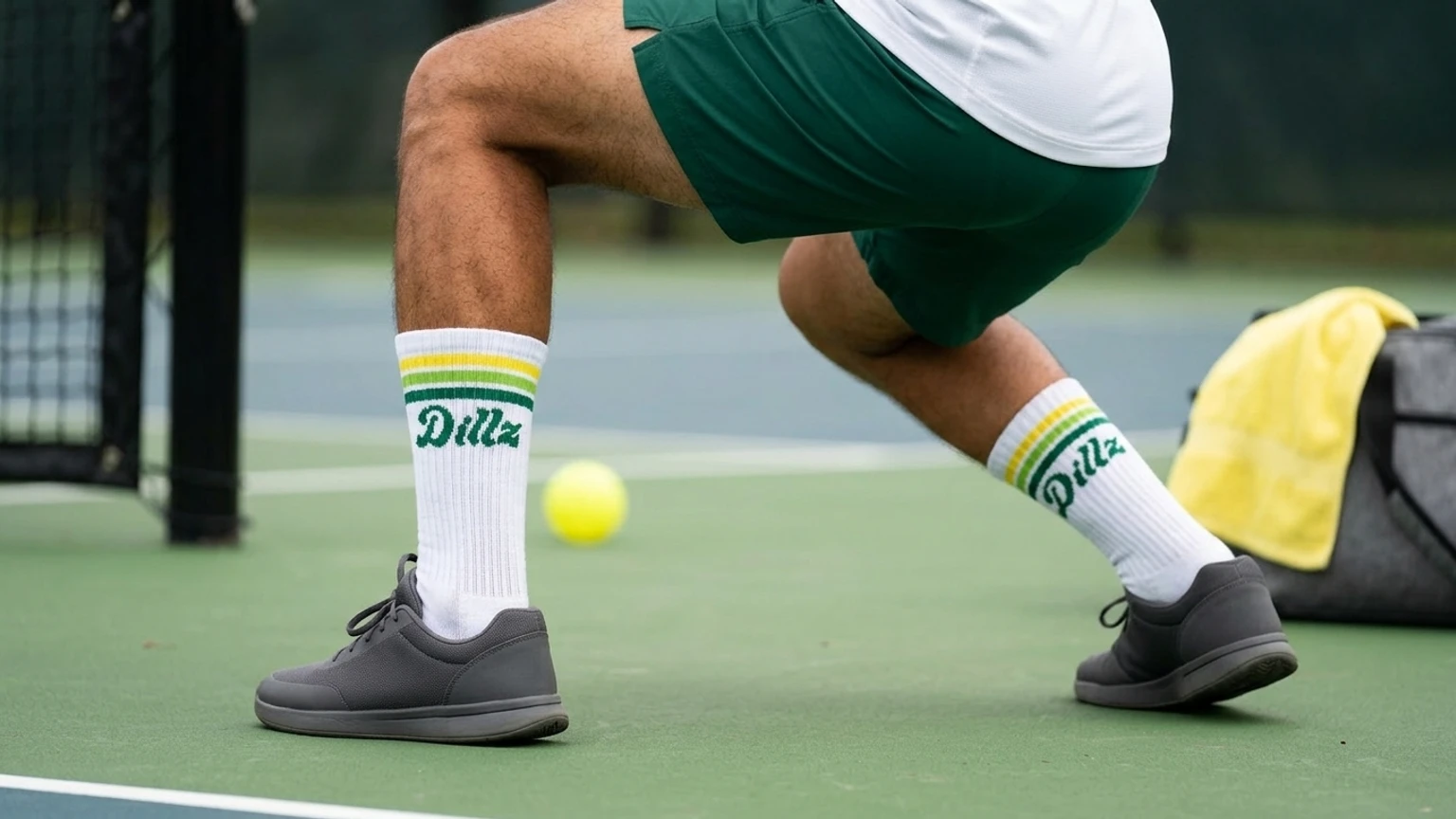
The first problem may justify trying a grip sock. The second requires attention to the shoe and playing surface. Dillz’s Grippy Grippy™ Crew and Ankle socks are designed for pickleball players who already have a suitable court shoe but feel their foot or sock shifting inside it. Dillz describes the styles as combining full-sole DillzGrip traction with breathable comfort and ArchHug arch support. The product family includes crew and ankle heights, giving players a way to match coverage to the shoe and personal preference.
Players who want to understand the distinction in more detail can read about what non-slip socks actually do inside a shoe. For dedicated road mileage, regular moisture-wicking socks for running may remain the better fit because road running does not require the same internal grip priority.
Build a simple sweaty-feet sock rotation
A useful sock rotation starts with the shoe, climate, and session pattern. Choose ankle or crew height based on the shoe collar and the amount of coverage preferred. Choose light or moderate thickness based on available shoe space. In hot conditions or during long sessions, prioritize faster drying and ventilation. In cooler conditions, a merino blend may offer a more comfortable temperature balance.
Care affects performance as much as the original purchase. Let socks dry fully between sessions, follow the garment label, and avoid returning damp pairs to a closed gym bag. Players who wash grip socks should use the manufacturer’s care instructions, since heat and rough treatment can affect stretch and grip. Dillz’s guide to washing grip socks and keeping them court-ready covers that maintenance issue directly.
A three-pair rotation can help frequent players separate laundry from court planning. One pair can be ready for the next session, one can be drying, and one can serve as a backup. The exact number is less important than avoiding repeated use of a damp or stretched pair.
When testing a new sock, use a familiar court shoe and a similar session length. Record five observations: dampness, bunching, hot spots, foot movement, and pressure after warm-up, mid-session play, and cooldown. Keep the pair when it solves a specific problem without creating another one. Replace it when the stretch is gone, roughness persists after washing, or the sock no longer stays in place.
Key Takeaways
- Moisture-wicking socks for running can suit pickleball when their fiber, knit, fit, and cushioning match the court shoe.
- Synthetic blends and merino wool are useful starting points for sweaty feet; cotton is less suitable for sustained high-activity sessions.
- Sock grip reduces movement inside the shoe, while outsole traction controls contact with the court.
- Test new socks through warm-up, mid-session play, and cooldown before judging their performance.
For players whose main bottleneck is foot movement inside a properly fitting court shoe, Dillz Grippy Grippy™ Crew and Ankle socks offer a pickleball-focused option. The right choice should match the player’s shoe, sweat level, session length, and need for internal stability. Shop grip socks
Frequently Asked Questions
Are moisture-wicking socks good for running?
Yes. Moisture-wicking socks for running help move sweat away from the skin, improve ventilation, and reduce friction in high-contact areas. Choose a pair that also fits securely and leaves enough room inside the shoe.
What type of socks are best for running with sweaty feet?
Synthetic technical blends made with fibers such as polyester, nylon, or elastane are strong choices because they dry efficiently during warm or high-activity sessions. Merino wool blends can also work when temperature regulation and softness matter more than the lightest possible feel.
What is the most moisture-wicking sock?
There is no universal winner because moisture performance depends on fiber, knit, ventilation, fit, and shoe conditions. Treat dramatic speed claims as directional unless they include independent testing. A breathable synthetic blend with a secure fit is a practical starting point for many sweaty-foot runners and court players.
Which socks are best for sweaty feet in summer?
Lightweight synthetic socks with mesh ventilation and modest cushioning usually suit hot summer sessions. Nike’s guidance on socks for sweaty feet and summer running supports choosing moisture-wicking technical fabrics, while the final decision should account for shoe fit and how long the player stays on court.