Best Pickleball Shoes: How to Choose the Right Pair for Your Game
Compare the best pickleball shoes by court, fit, and movement needs, then find the right grip-sock setup for more settled in-shoe footing.
On this page
The best pickleball shoes match the court surface, support lateral movement, and hold your foot securely through quick stops and repeated starts. A pickleball label alone doesn't make a shoe the right choice. Fit, outsole design, multidirectional support, and your primary court should decide the purchase.
What makes the best pickleball shoes for court movement?
The right court shoe supports side-to-side movement, quick stops, split steps, and repeated starts without squeezing the forefoot. Pickleball players move differently from runners, so court stability and fit matter more than soft, straight-line cushioning.
The American Academy of Orthopaedic Surgeons recommends shoes designed for pickleball or tennis because they provide the support and court traction these sports require. That guidance leaves room for a suitable tennis shoe, especially when its outsole and fit match the court. (orthoinfo.aaos.org)
Many running shoes are built around forward movement. ASICS notes that this design can limit side-to-side support, although that doesn't make every running shoe unsuitable for casual play. The practical rule is simple: if your game includes frequent lateral cuts, choose a court shoe designed for multidirectional movement.
Use this framework when comparing models:
- Traction: Does the outsole suit your court surface?
- Lateral stability: Does the shoe feel secure when you plant and change direction?
- Cushioning: Does it absorb repeated movement without feeling bulky?
- Durability: Can the outsole handle your usual court?
- Breathability: Will the upper stay comfortable during longer sessions?
- Fit: Does the heel stay put while your toes can move?
- Surface use: Is the shoe intended for indoor, outdoor, or all-court play?
A good example is a stable court shoe that lets you slide into position while keeping the heel anchored. A poor example is a soft running shoe that feels comfortable walking around but allows the foot to roll or shift during a hard lateral plant.
How to compare indoor and outdoor court shoes
Indoor and outdoor courts place different demands on the outsole. For gritty outdoor surfaces, ASICS recommends a strong rubber compound for durability. For indoor hardwood, the company says softer rubber is less likely to leave scuff marks while still providing traction. Those are manufacturer guidelines, so confirm the exact outsole and surface recommendation for the model you’re considering. (adidas.com)
Indoor players often prioritize court feel, lighter weight, and a sole that won't mark the floor. Outdoor players usually need stronger abrasion resistance because rough courts wear down rubber faster. Recreational players who switch between surfaces should look for an all-court model, then check whether the outsole is approved or recommended for both settings.
Use this quick decision path:
| Decision | What to check | What it means for you |
|---|---|---|
| Primary court | Indoor hardwood, outdoor acrylic, or both | Choose the outsole before comparing colors or cushioning |
| Playing frequency | Occasional sessions or regular league play | Frequent players should prioritize durable rubber and secure fit |
| Movement style | Mostly baseline movement or frequent cuts | Aggressive lateral movement calls for stronger side support |
| Shoe feel | Light and flexible or cushioned and structured | Pick the feel that keeps your foot controlled without fatigue |
Players who are still deciding between tennis and pickleball models can use this guide to compare pickleball shoes and tennis shoes. The better choice is the shoe that matches the court and movement pattern, regardless of the sport printed on the box.
Best pickleball shoes to research by player need
There is no evidence-backed universal winner for every player, foot shape, and court. Instead, research the exact model, surface use, fit, and current availability.
| Shoe to research | Documented features | Best fit for | Tradeoff to check |
|---|---|---|---|
| HEAD Motion Pro | HEAD describes it as pickleball-specific, with stability, support, flexibility, and speed | Players who want a pickleball-first design | Manufacturer claims are not independent comparisons |
| Babolat Jet Mach Pickleball | Michelin outsole, Matryx upper, EVA heel cushioning, and an all-court designation | Players seeking a lighter, supportive all-court option | The official page names it Jet Mach Pickleball, while some retailers use “Jet Mach 3,” so verify the exact model |
| K-Swiss Express Light Pickleball | K-Swiss describes it as lightweight, breathable, comfortable, and agile | Recreational players who value a lighter feel | The reviewed product page doesn't establish a specific indoor or outdoor recommendation |
| Skechers Viper Court Pro 2.0 | Goodyear Gold compound outsole, marketed for quick stops, starts, and controlled slides | Players who want a structured pickleball shoe | Fit and indoor versus outdoor use still need checking |
| adidas GameCourt | Lightweight mesh upper, cushioned midsole, padded heel, and traction outsole | Budget-conscious players who want a tennis-court option | Verify the exact GameCourt SKU because the collection includes tennis shoes rather than one pickleball-specific model |
At the time of review, Babolat displayed the Jet Mach Pickleball at $104.30, reduced from $149, while Skechers displayed the Viper Court Pro 2.0 at $115. adidas listed GameCourt 3 models at $75. Prices, stock, colors, and sizes change, so treat these as current page displays rather than fixed prices. (babolat.com)
For wide feet, prioritize the model that gives the forefoot room without losing heel hold. For comfort-focused players, compare cushioning and upper flexibility after confirming stability. For indoor players, outsole suitability should decide the shortlist before brand preference.
Fit, traction, and the role of grip socks
Shoe traction comes from the outsole meeting the court. Sock grip describes how securely the foot and sock stay positioned inside the shoe. These solve different movement problems.
Start with the shoe. The AAOS recommends at least a half-inch between the longest toe and the shoe tip, with enough room for the toes to move without cramping. Try court shoes with the socks intended for play, then check heel hold, forefoot width, arch comfort, and pressure around the ankle. (orthoinfo.aaos.org)
A well-fitting shoe can still allow unwanted internal movement if the sock slides against the insole or the foot shifts inside the sock. A 2022 study of team-sport players found greater static friction with grip socks than regular socks, faster slalom performance, and reduced forefoot displacement. It also found no difference in shoe-to-floor friction during side cuts and turns, so the finding supports possible in-shoe stability rather than extra court traction. (pubmed.ncbi.nlm.nih.gov)
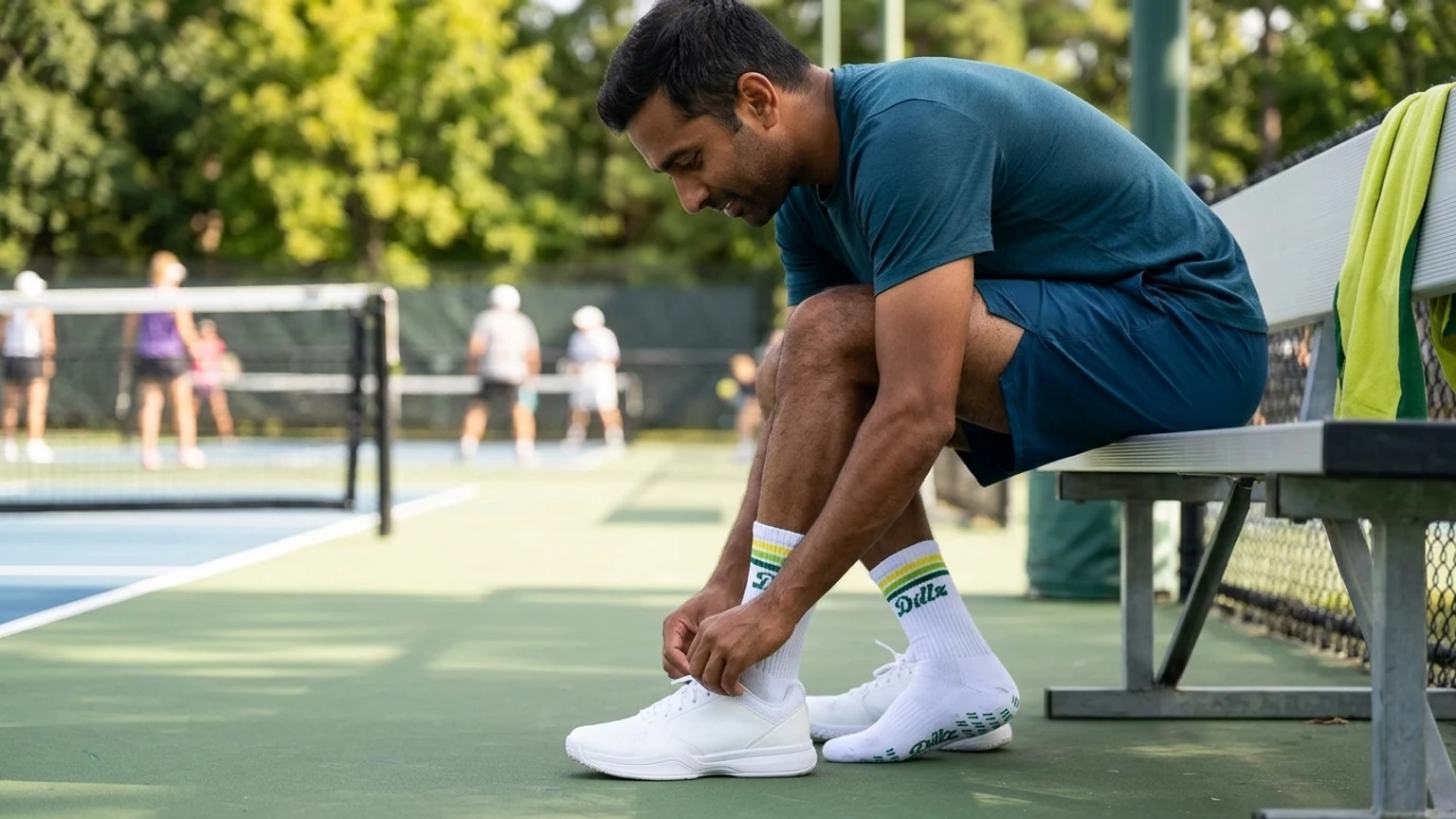
Dillz Grippy Grippy™ Crew and Ankle socks are one option for players who want full-sole grip inside a properly fitting court shoe. Dillz describes both styles with breathable fabric and targeted arch support, while Crew provides taller coverage and Ankle offers a lower profile. Tavi Tec emphasizes inside-and-outside grip, Pointe Studio focuses on Pilates and studio workouts, OS1st emphasizes cushioning and cooling, and squidsocks.ink markets S-GRIP zones for in-shoe movement concerns. Each brand's claims should be treated as product descriptions, not independent court testing.
Players comparing materials and coverage can also review what grip actually does inside a pickleball shoe.
View this post on Instagram
A simple buying checklist for your next court shoe
Use this workflow before committing:
- Identify the main court. Choose indoor, outdoor, or all-court use first.
- Measure your fit. Leave at least a half-inch beyond the longest toe and make sure the forefoot isn't cramped.
- Test lateral movement. Walk, plant, and shift side to side. The heel should remain secure while the shoe bends naturally.
- Match the shoe to your play. Frequent league players may need stronger durability and support. Casual players may prefer a lighter, more flexible feel.
- Check return terms. A shoe can look right on paper and still create pressure, rubbing, or heel movement.
- Test with match socks. Your playing socks change the internal fit, so use them during the try-on.
A tennis or pickleball court shoe is usually a better fit than a general trainer when your sessions include repeated cuts and quick stops. Replace worn shoes when the outsole loses its pattern, the midsole feels uneven, or the upper no longer holds the foot. New cushioning or grip socks cannot restore a worn-out outsole.
For local try-ons, this smart workflow for finding pickleball shoes near you can help. If the shoe fits correctly but your foot or sock still shifts inside it, Dillz Grippy Grippy™ offers an inside-the-shoe option. Players who want more detail on pressure points can also review the most comfortable pickleball shoe setup.
Key Takeaways
- Choose court shoes by surface, fit, and multidirectional support rather than the pickleball label alone.
- Outdoor courts generally demand durable rubber, while indoor courts require attention to scuffing and court feel.
- Verify the exact model and current product details because names, prices, and availability change.
- Grip socks address movement inside the shoe. They do not change outsole-to-court traction.
- A properly fitting shoe remains the foundation of a comfortable court setup.
Once the court, fit, and outsole are right, grip socks can address a separate problem: unwanted movement between the foot, sock, and shoe during play. For players who want a more settled in-shoe feel, Shop grip socks.
Frequently Asked Questions
Are pickleball shoes different from tennis shoes?
They can be, but they serve a similar movement need. Both should support lateral movement and provide suitable court traction, and a well-fitting tennis shoe can work for pickleball when its outsole matches the surface.
Can I wear running shoes to play pickleball?
You can wear them for casual play if they feel stable and secure, but many running shoes are designed mainly for straight-line movement. Players who cut side to side regularly should compare a court shoe with stronger lateral support.
What shoes are best for indoor pickleball courts?
Look for an indoor or all-court outsole, secure lateral support, comfortable cushioning, and rubber that is less likely to scuff indoor flooring. The best pickleball shoes for indoor play depend on the court, your foot shape, and how much you move during rallies.
How should pickleball shoes fit?
Leave at least a half-inch between your longest toe and the shoe tip. Your toes should move freely, your heel should stay anchored, and the forefoot should not slide during lateral cuts.
Do grip socks improve traction in pickleball shoes?
Grip socks can improve friction between the sock and shoe, which may reduce in-shoe foot movement. They do not increase outsole-to-court traction, and they cannot correct a shoe that fits poorly.