Best Pickleball Socks: Match Your Pair to Your Court-Day Needs
Find the best pickleball socks for grip, compression, cushioning, and comfort. Compare top options and match your pair to your game.
On this page
For most recreational and league players, the best pickleball socks are the pair that solves the movement problem inside your shoe. Grip socks suit players whose feet or socks slide during stops and lateral movement, while compression, cushioning, moisture control, and everyday comfort matter more for other court-day needs.
The right sock depends on what happens during your game
A sock can improve how your foot feels inside a well-fitting court shoe, but it cannot fix a loose shoe or replace the outsole traction designed for a pickleball court. Start by identifying the problem:
- Foot or sock movement inside the shoe: Look for full-sole or targeted grip.
- A need for structured support: Consider light compression or an arch band.
- Repeated impact and friction: Choose cushioning in the heel, toe, or high-contact areas.
- Heat and sweat: Prioritize breathable, moisture-managing materials.
- Court-to-everywhere style: Choose a height and design that works with both court shoes and casual footwear.
This scenario-based approach is more useful than naming one universal winner. A player who feels their heel lift during a split step needs a different sock from someone who simply wants a soft, cushioned layer for a long recreational session.
The key distinction is location. Sock grip works at the sock, foot, and insole interface. Shoe traction comes from the outsole rubber, tread pattern, court surface, and shoe fit. Understanding that difference prevents players from expecting a grip sock to solve the wrong problem.
Best options by playing priority
The ranking below compares construction and stated use cases, rather than treating every athletic sock as interchangeable.
| Option | Price information | Main construction or stated feature | Best fit for | Trade-off |
|---|---|---|---|---|
| Dillz Grippy Grippy™ Crew and Ankle | Not included in supplied product facts | Full-sole in-shoe grip, breathable comfort, targeted arch support | Pickleball-first players who feel movement inside court shoes | Grip-focused design may be unnecessary if the shoe already feels secure |
| OS1st The Pickleball Sock | $17.99 no-show and $18.99 crew on the reviewed product pages | Light arch compression, cushioning, moisture-wicking yarns, breathable panels | Players prioritizing compression-oriented support and cushioning | Does not center its design on full-sole in-shoe grip |
| Tavi Jess Grip Socks | Varies by style on the reviewed product page | Non-slip technology, compression arch support, crew length | Players who want studio-to-court styling and arch structure | Studio-oriented fit may not match every court shoe |
| Pointe Studio Core Grip Pack | Pack pricing varies by current product listing | Midweight terry footbed, full-foot PVC grip, compression arch support | Players who value cushioning and studio versatility | The terry footbed can feel warmer or bulkier in a snug court shoe |
| Squid Socks adult grip styles | $15 to $18 for single pairs, with 3-packs listed at $46 to $52 on reviewed pages | Inside and outside heel grip, bottom traction, cushioned toe and heel | Players who want broad sport crossover and heel-lock features | The grip system is designed across several sports, so it is less pickleball-specific |
1. Dillz Grippy Grippy™ Crew and Ankle: best for a more settled feel inside court shoes
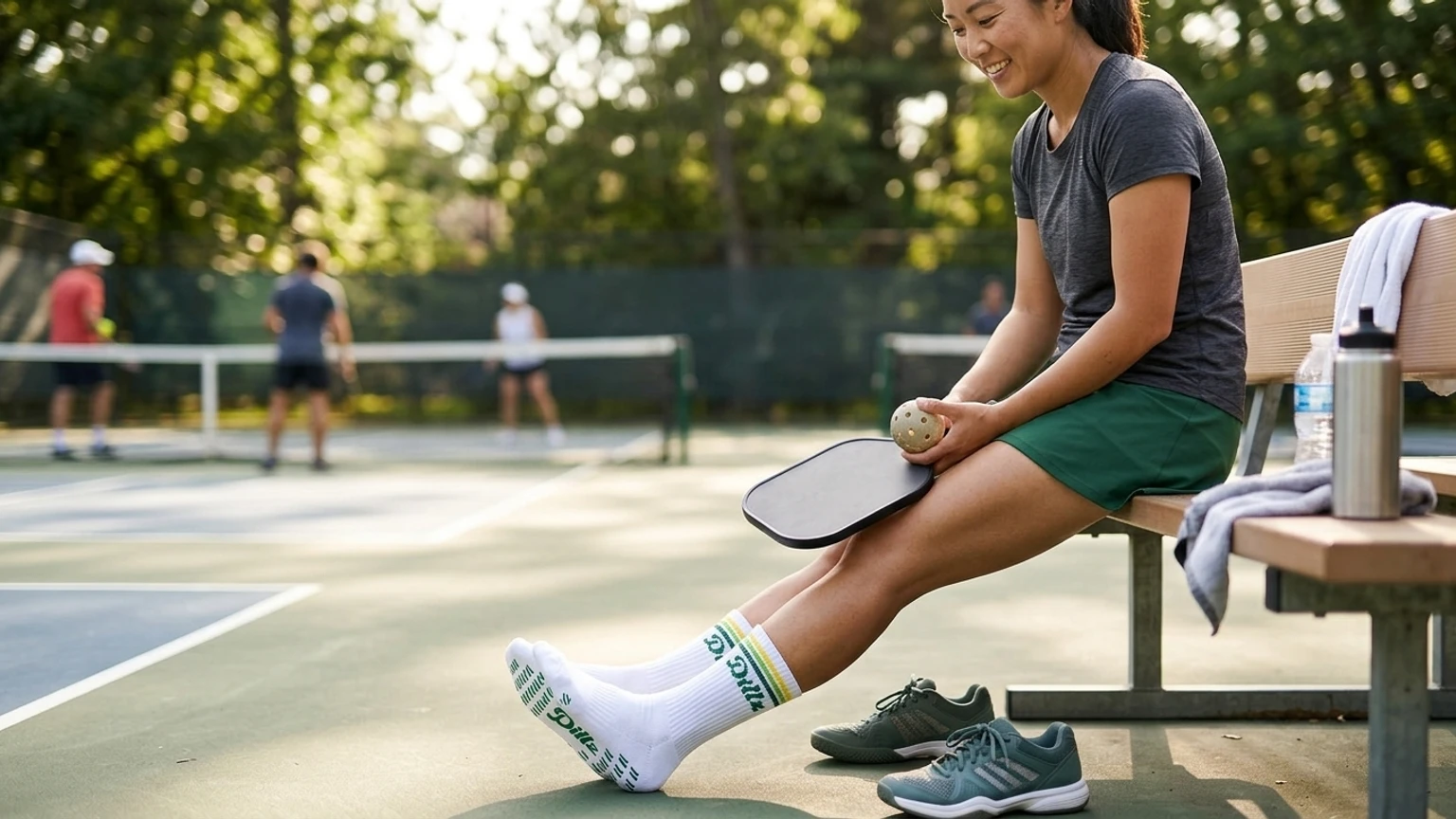
Dillz is the strongest fit for pickleball players whose main complaint is unwanted foot or sock movement during quick stops, split steps, and lateral movement. Its Grippy Grippy™ Crew and Ankle socks combine full-sole grip inside well-fitting court shoes with breathable comfort and targeted arch support.
The practical edge is focus. Dillz is designed around pickleball movement, so the decision is straightforward: choose it when the sock-shoe interface is the problem. Crew and ankle heights let players match coverage to the collar of their court shoe and their preferred amount of upper-leg coverage.
Dillz also fits players who move between pickleball and adjacent activities such as tennis, padel, or casual training, while keeping pickleball as the primary use case. The limitation is equally clear: players seeking medical-style compression or a heavily cushioned footbed may prefer another construction.
For more detail on the mechanism, see this guide to what grip does inside a pickleball shoe.
2. OS1st The Pickleball Sock: best for compression-oriented support
OS1st The Pickleball Sock is the better match for players who want light arch compression, cushioning, and breathability in a pickleball-specific design. Its official product page lists targeted compression, strategic cushioning, moisture-wicking yarns, a seamless toe, and a secure anatomical fit. The same page lists the no-show model at $17.99 and the crew model at $18.99 when reviewed. OS1st product details and current pricing support those specifications. (os1st.com)
The sock makes sense for players who notice heat, friction, or fatigue more than in-shoe sliding. It also gives buyers a clear compression-oriented alternative to grip-first socks.
Its limitation is the priority it serves. OS1st emphasizes cushioning, moisture management, and light compression. Players who specifically want full-sole grip between the sock and insole should compare that feature directly before choosing.
3. Pointe Studio Core Grip Pack: best for cushioned everyday play
Pointe Studio’s Core Grip Pack brings a midweight terry footbed, full-foot PVC grip, and compression arch support. The manufacturer positions it for Pilates, barre, and yoga, so it is best suited to players who want a cushioned, studio-friendly sock that can also serve lighter court sessions. Pointe Studio’s Core Grip Pack specifications identify the terry footbed, full-foot grip, and arch support. (pointestudio.com)
The added material can feel comfortable during casual play, especially for players who prefer a plush footbed. It can also take up more room inside a close-fitting court shoe. Check the shoe fit with the sock on before committing to repeated play.
Players comparing cushioning profiles can also review what to look for in court socks, especially when deciding between a midweight footbed and a lighter performance knit.
4. Tavi Jess Grip Socks: best for style or studio-to-court versatility
Tavi Jess combines a trend-forward crew length with non-slip technology and compression arch support. Tavi describes the model as suitable for cooler studio sessions, which makes it a natural choice for players who want one pair to move between Pilates, casual wear, and court-related activities. Tavi’s Jess product description lists the grip pattern and supportive arch band. (taviactive.com)
The trade-off is use-case specificity. Tavi’s design language and stated setting lean toward studio wear. Players who spend most of their time in competitive pickleball and want court-first construction should compare the sock’s fit, breathability, and in-shoe grip with a pickleball-specific option.
Sock grip is not the same as shoe-to-court traction
Full-sole grip can reduce unwanted movement between the sock and the insole when the shoe already fits correctly. That can help the foot feel more settled during a lateral push, stop, or reset. Squid Socks, for example, describes separate grip zones inside and outside the heel, along with bottom traction, and lists pickleball and tennis among its intended sports. Squid Socks performance grip details explain that distinction. (squidsocks.ink)
The outsole remains responsible for contact with the court. Rubber compound, tread, court material, and shoe fit determine whether the shoe grips or slides against the playing surface. Grip socks do not replace appropriate court shoes.
Use this troubleshooting sequence:
- Check shoe fit. Your heel should stay seated, and your toes should have usable room.
- Identify the movement. Is the shoe sliding on the court, or is your foot moving inside the shoe?
- Match the solution. Choose court shoes for outsole traction and grip socks for the sock-shoe interface.
Players who want to understand the difference in greater depth can read this guide to non-skid socks for indoor pickleball.
View this post on Instagram
A quick court-day test before buying a multipack
Test a new pair during a normal session before committing to a multipack. Walk, split step, stop, and move side to side in the same court shoes used for play.
Check these points:
- Heel placement: The heel stays seated without constant adjustment.
- Toe room: Toes are not pressed against the front or folded under.
- Arch feel: Support feels secure without creating a tight band or numbness.
- Seam comfort: The toe seam stays smooth during repeated movement.
- Breathability: The upper does not feel excessively hot as play continues.
- Stability: The foot feels settled during stops and lateral changes.
Compare short-session comfort with repeated-play value. A single pair is sensible when testing a new construction or playing occasionally. A 3-pack becomes more practical for players who play several times a month or more, since it keeps clean pairs available between sessions and makes rotation easier.
Crew and ankle heights come down to coverage and shoe collar preference. A crew may feel more substantial above the collar, while an ankle cut can feel less noticeable. Neither height guarantees protection from blisters. Fit, seam placement, moisture, and friction determine comfort. For more on the decision, see how to choose ankle grip sock height.
Choose the pair that solves your actual court problem
Use this checklist when choosing among the options:
- Foot or sock slides inside a well-fitting shoe: Dillz Grippy Grippy™.
- Compression and light arch structure come first: OS1st.
- Cushioning matters for everyday recreational play: Pointe Studio.
- Style and studio crossover matter most: Tavi.
- Heel grip and multi-sport use are priorities: Squid Socks.
Dillz suits pickleball-first players who want full-sole in-shoe grip, breathable comfort, and targeted arch support. An alternative may be a better fit when the main need is a sourced compression feature, a thicker terry footbed, or a studio-led style.
Once the problem is clear, the choice becomes easier: match the sock to the movement happening inside the shoe, then confirm that the shoe itself is appropriate for the court. Players seeking a more settled feel inside a well-fitting court shoe can review the Dillz Grippy Grippy™ pickleball sock options.
Frequently Asked Questions
What should I look for in pickleball socks?
Look for a secure fit, comfortable toe construction, breathable material, and enough cushioning for your shoe. If your foot or sock moves inside the shoe, add full-sole or targeted grip to the checklist.
Do grip socks improve traction on a pickleball court?
Grip socks can reduce movement between your foot, sock, and insole inside a well-fitting court shoe. They do not improve the shoe’s outsole traction against the court surface, so they cannot replace proper court shoes.
Are grip socks better than regular socks for pickleball?
Grip socks are better when in-shoe movement is the problem. Regular performance socks can be the better choice when cushioning, moisture control, compression, or a lighter feel matters more than sock-shoe grip.
Should pickleball socks be thick or thin?
Choose the thickness that fits your court shoe without crowding your toes or compressing your foot. Thin socks suit close-fitting shoes and hot conditions, while thicker socks can work when the shoe has enough internal room for cushioning.
How should pickleball socks fit inside court shoes?
The sock should lie flat, keep the heel seated, leave usable toe room, and feel supportive across the arch without numbness. Test the fit with stops and lateral movement, not only while standing still.